Balearics vs Croatia sailing is a genuinely close call for many charterers, since both regions offer warm Mediterranean sailing, a strong charter industry and a wide choice of anchorages. The differences are more about character and logistics than one destination being objectively better: Croatia’s Dalmatian coast has the larger fleet and more islands to explore in a single trip, while the Balearics offer a shorter transfer from much of Western Europe and a more compact, easier-to-plan week. This guide compares the two factor by factor.
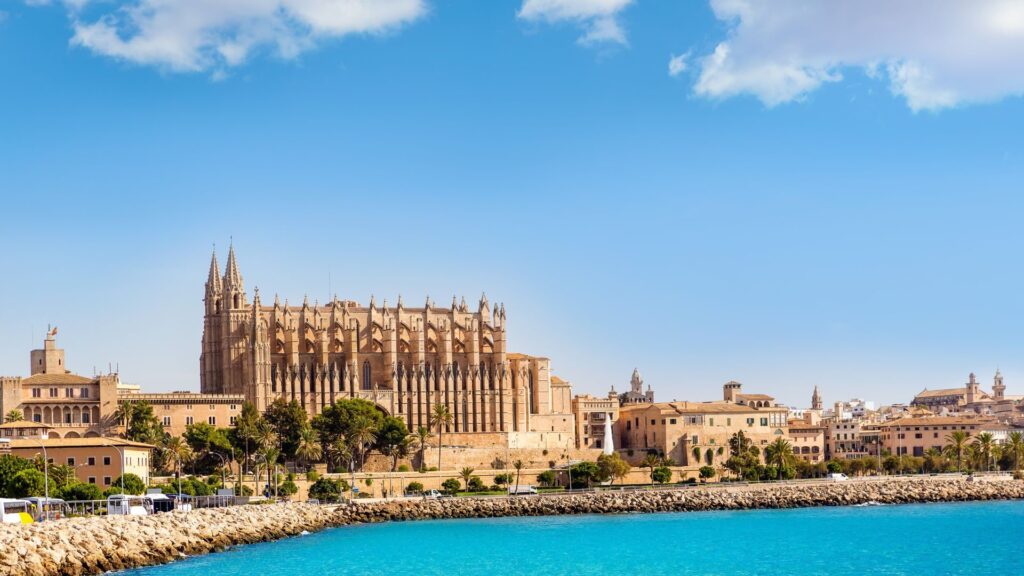
La respuesta corta
Choose Croatia if you want the largest possible choice of boats and the option to island-hop across a genuinely vast archipelago — over 1,000 islands along the Dalmatian coast — within a single week. Choose the Balearics if you want a shorter transfer from much of Western Europe, a more compact archipelago that is easier to plan a first charter around, and the option to combine sailing with Spain’s wider tourism infrastructure.
Neither region is a compromise choice — both are established, well-run Mediterranean sailing destinations with mature charter industries. The decision comes down to how far you are travelling from, and whether you want breadth (Croatia’s islands) or a more contained, easier-to-plan week (the Balearics).
Fleet size and choice
Croatia holds the world’s largest nautical charter fleet, with well over 4,000 vessels available for rent, spanning sailboats, catamarans, motor yachts and gulets across bases in Split, Trogir, Dubrovnik and Zadar. The Balearics’ fleet is smaller in absolute terms but still substantial, concentrated across Mallorca, Menorca, Ibiza and Formentera — see our Mallorca vs Ibiza comparison for how fleet size varies within the Balearics themselves.
For a charterer specifically prioritising the widest possible choice of boat at a specific date, Croatia’s scale gives you more to search through. For most charterers, though, the Balearic fleet is more than sufficient — the practical difference is felt more in extremely short-notice bookings during peak season than in everyday availability.
Worth noting too: a larger fleet does not automatically mean easier decision-making — many first-time charterers find the Balearics’ smaller, more curated set of options easier to compare and choose between.
Coastline and islands
Croatia’s Dalmatian coast is genuinely vast — over 1,000 islands, many uninhabited, strung along a coastline that supports multi-week itineraries without repeating an anchorage. Popular island stops include Hvar, Vis and Korčula. The Balearics are more compact: four main islands, each individually smaller than the full Dalmatian archipelago, but each with a distinct character — see our sailing itineraries for real 7-day routes around Ibiza–Formentera, Menorca and Mallorca–Cabrera.
This is really a breadth-versus-depth distinction: Croatia rewards charterers who want to keep discovering new islands across a longer or repeat trip, while the Balearics suit a week that explores one or two islands thoroughly rather than covering the maximum possible distance.
Sailing season and weather
Both regions share a broadly similar Mediterranean sailing season, running from roughly April through October with a July–August peak in demand and temperature. Adriatic conditions in Croatia are generally considered a touch more variable, with notable local winds (the bora and the jugo) that experienced sailors plan around; the Balearics’ weather, tracked by AEMET, Spain’s national weather service, is generally steadier through the same window. Neither difference should be a primary deciding factor for a typical charter week, but it is worth noting if you are new to sailing and want the more forgiving of the two.
Llegando
The Balearics benefit from Palma de Mallorca and Ibiza airports’ extensive year-round and summer-season European connections, putting much of Western Europe within a two- to three-hour flight. Croatia’s main charter bases are served by Split and Dubrovnik airports, which also carry strong seasonal European route networks but are, for many Western European departure points, a somewhat longer flight than the Balearics. Travel time from a specific departure city can vary the comparison meaningfully, so check both airports’ direct routes for your dates before deciding on travel logistics alone.
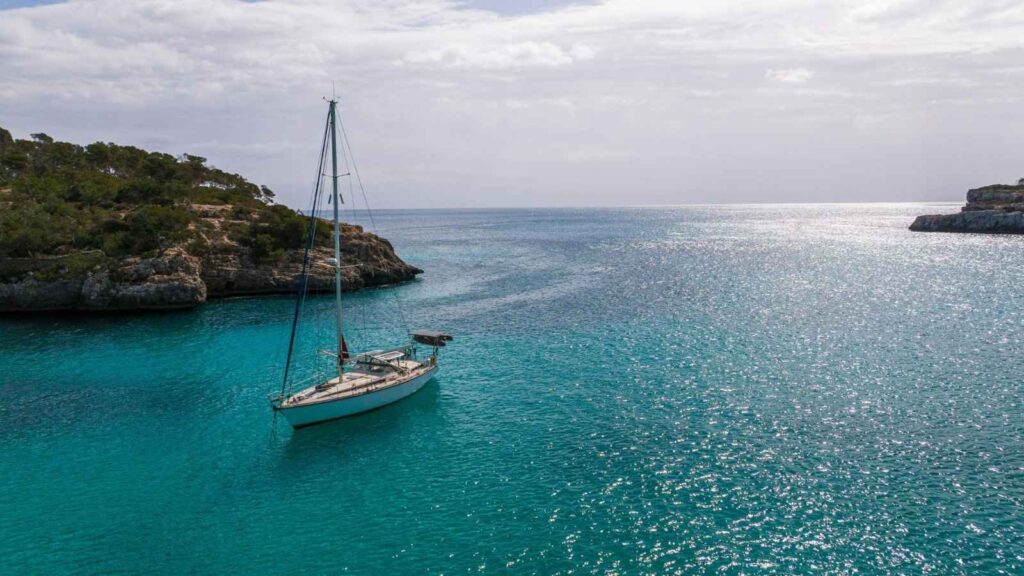
Comparación de costos
Base charter rates for a comparable boat are broadly similar between the two regions, though Croatia’s larger fleet can create more price competition at the budget end, particularly outside peak season. See our Balearic price comparison for the factors that move Balearic pricing specifically. Marina and mooring costs, local taxes, and provisioning costs also differ by country and are worth checking against your specific dates and route in either region rather than assumed from a general reputation either way.
Anchoring and mooring style
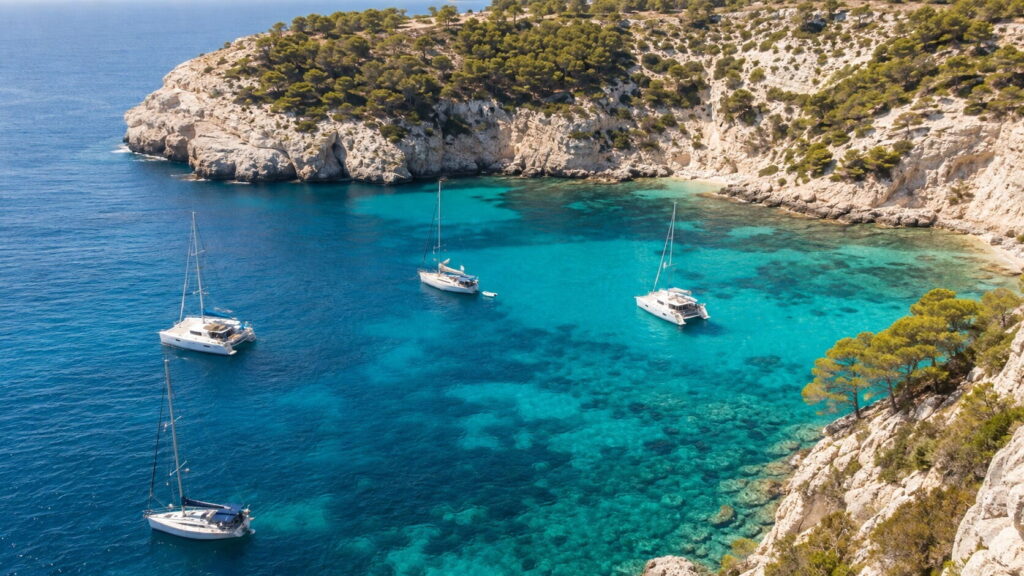
Croatia’s charter culture leans more heavily on marina-to-marina hopping between islands, given the sheer number of islands and the convenience of Croatia’s well-developed marina network. The Balearics have a strong marina infrastructure too, tracked by Puertos de Baleares, but charter itineraries there put more emphasis on anchoring in a cala for the day or night rather than always mooring in a marina, reflecting the islands’ calmer, more sheltered bay geography.
Language and culture onshore
Both destinations are well set up for international charterers, with English widely spoken in the charter industry in both countries. The Balearics offer Spanish and Catalan-influenced island culture with well-established tourism infrastructure across all four islands; Croatia’s Dalmatian coast offers a distinct Adriatic character, with historic towns like Dubrovnik and Split adding a strong cultural dimension alongside the sailing itself. Neither is more or less “authentic” — they simply offer different onshore experiences to pair with your time on the water.
If historic old towns and a strong evening-ashore culture matter as much to your group as the sailing itself, factor that into the decision alongside the purely nautical comparisons above.Side-by-side comparison
| Factor | Islas Baleares | Croatia |
|---|---|---|
| Charter fleet size | Substantial, concentrated across 4 islands | World's largest, 4,000+ vessels |
| Number of islands | 4 main islands | 1,000+ along the Dalmatian coast |
| Sailing season | April–October, steadier conditions | April–October, more variable local winds |
| Flight access (Western Europe) | Generally shorter | Generally longer |
| Itinerary style | Cala-anchoring emphasis | Marina-to-marina hopping emphasis |
| Lo mejor para | A contained, easy-to-plan first charter | Island-hopping breadth, repeat charterers |
So, which should you choose?
If you are planning a first Mediterranean sailing charter, or want a shorter flight from much of Western Europe and a more contained, easier-to-plan week, the Balearics are the lower-friction choice. If you specifically want to island-hop across the largest possible number of anchorages and are comfortable with a somewhat longer flight, Croatia’s scale is hard to match.
Browse real Balearic listings via our búsqueda de yates de alquiler, or see our guide on first-time charter planning if you are still deciding between destinations generally, not just these two.
Questions about choosing the Balearics or Croatia
Clear information before you pick a destination.
Is Croatia cheaper than the Balearics for a yacht charter?
Base rates are broadly similar for a comparable boat; Croatia’s larger fleet can offer more budget-end competition, particularly outside peak season.
Which has better weather for sailing?
Both share a similar Mediterranean season from April to October. The Balearics’ conditions are generally considered steadier; Croatia’s Adriatic has notable local winds worth planning around.
Can beginners charter comfortably in both regions?
Yes, both have well-developed charter industries suited to a range of experience levels, including skippered options for those without a licence.
Which is better for island-hopping?
Croatia, by a clear margin — its 1,000+ islands support far more variety across a single trip than the Balearics’ four main islands.
Which is easier to reach from Western Europe?
The Balearics generally offer a shorter flight from most Western European departure points, though this varies by specific route and airport.
Book flights and transfers as early as you can for peak-season dates in either destination, since both regions see a significant jump in demand — and price — through July and August.Tell us your dates and group size.
We will match you with the right island and yacht.