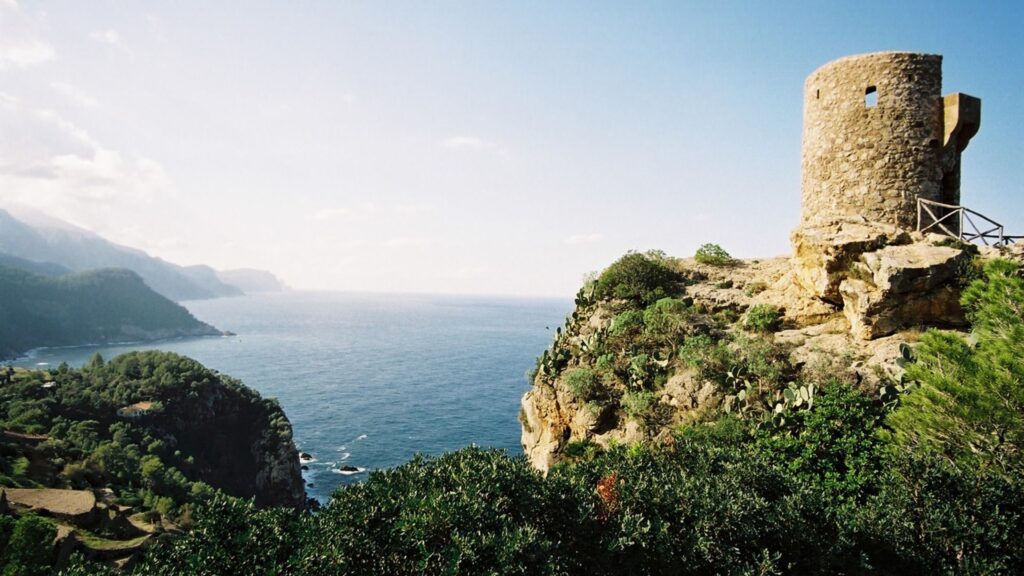
Mallorca’s coastline runs from the dramatic Tramuntana cliffs in the north-west to calm, sandy bays in the south, and a charter here can reach a genuinely varied set of anchorages within a single week. This guide covers six real calas worth building a route around, with honest notes on access, character and who each one suits.
La respuesta corta
For calm, shallow water and a classic beach day, Es Trenc in the south is hard to beat. For dramatic scenery reachable only by sea (or a very committed drive), Sa Calobra and Cala Tuent on the Tramuntana coast deliver the most memorable anchorages. For a working fishing-village atmosphere with real onshore character, Cala Figuera and Port d’Andratx add variety to a week built mostly around swimming stops.
Es Trenc
Es Trenc, on Mallorca’s south coast, is one of the few remaining undeveloped white-sand beaches in the Balearics, protected from the resort development seen elsewhere on the island. The water is shallow and calm for a long way out, making it a reliable, low-risk anchorage for families and less experienced groups alike. It gets busy in peak season, so an early or late-day stop avoids the worst of the crowds.
The beach sits within a protected natural area, and Illes Balears, the official Balearic tourism board, highlights it as one of the archipelago’s best-preserved coastal landscapes precisely because of that protected status — a reminder to anchor carefully and take any rubbish away with you.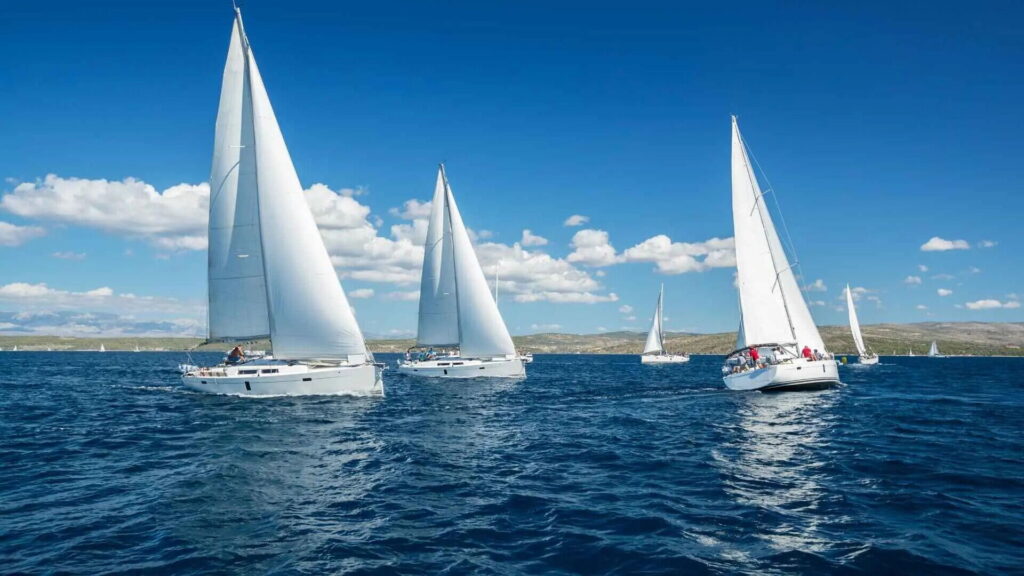
Sa Calobra and Torrent de Pareis
Sa Calobra sits at the base of the Tramuntana mountains, where the Torrent de Pareis gorge meets the sea — a striking setting reachable by sea in a way it genuinely isn’t by land, since the coast road down is a notoriously tight, switchback drive most visitors choose to avoid entirely. Arriving by boat sidesteps that traffic completely and is, for many charterers, the single most memorable stop of a Mallorca week.
The gorge itself, Torrent de Pareis, is walkable from the small beach at low water and is considered one of the most dramatic short hikes in the Balearics, though conditions can change quickly after rain further inland — ask locally before setting off if you plan to walk any distance into the gorge.Cala Tuent
A short distance from Sa Calobra, Cala Tuent is quieter and less visited, with a pebble-and-sand beach backed by the same dramatic Tramuntana cliffs. It suits charterers who want the scenery of the north-west coast without the (relative) crowds that gather at Sa Calobra itself, particularly in the middle of the day.
Its more sheltered position also makes it a sensible fallback if conditions at Sa Calobra itself are too exposed on a given day, without giving up the Tramuntana scenery entirely.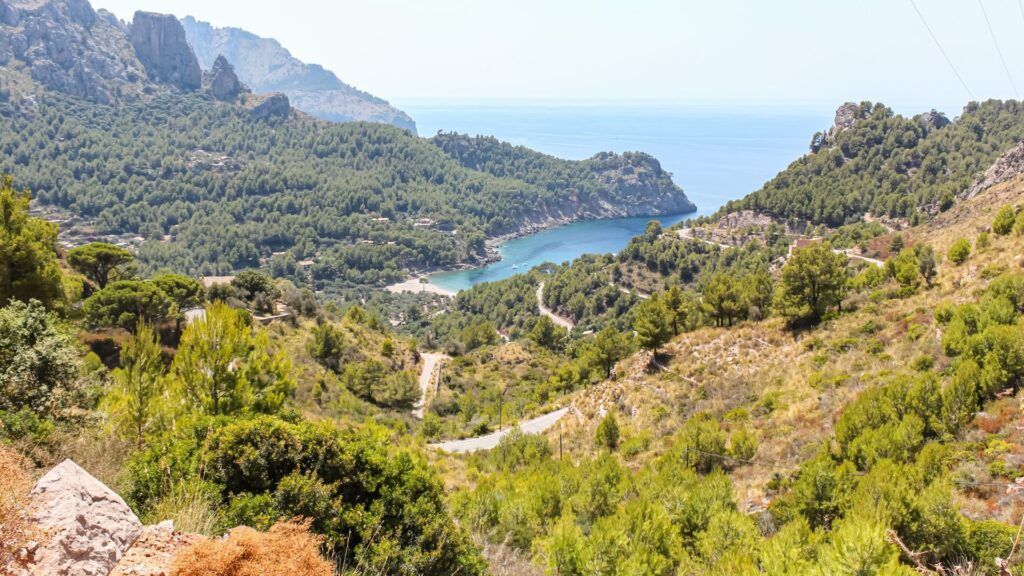
Platja de Formentor
At the northern tip of the island, Platja de Formentor combines pine-backed sand with turquoise water and views toward the Formentor peninsula’s dramatic cliffs. It is a longer sail from Palma, which makes it a natural fit for an itinerary based further north, or a full-day trip specifically built around this one destination.
The nearby Formentor lighthouse and viewpoint are also popular add-ons if your group wants a short excursion ashore alongside the beach time, though this requires anchoring and a tender trip rather than a direct berth.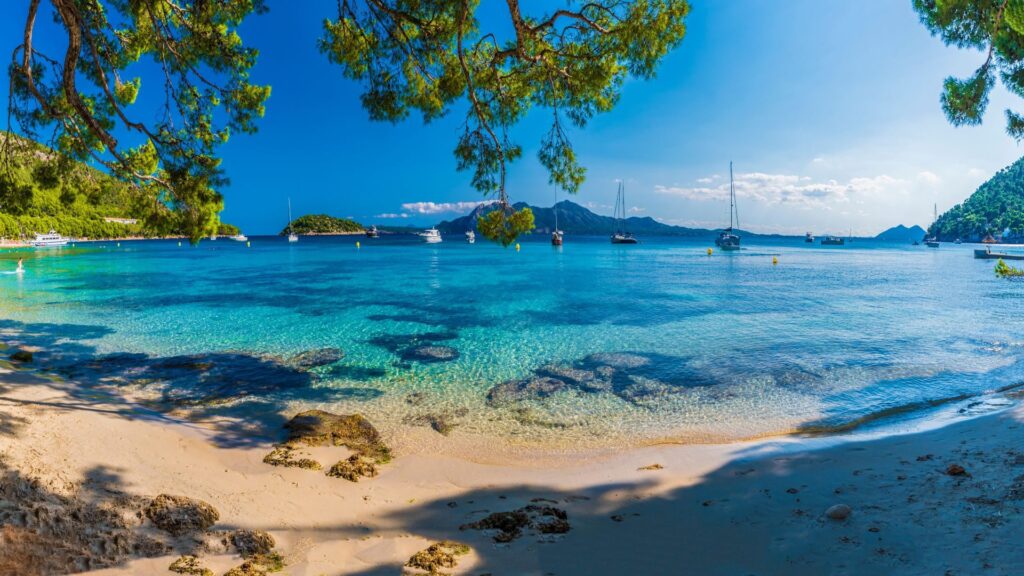
Cala Figuera
Cala Figuera, on the south-east coast, is a working fishing village built around a narrow, sheltered inlet rather than a beach anchorage — a different kind of stop from the others on this list, offering real onshore character, harbourside restaurants and a genuine fishing-port atmosphere rather than a swimming-focused visit.
It is a good choice for an evening stop specifically, when restaurant tables along the water make for a change of pace from a day spent entirely at anchor.Puerto de Andraitx
On the island’s more affluent west coast, Port d’Andratx combines a genuine working harbour with upscale marina facilities and restaurants, making it a good base or stop for provisioning, refuelling or an evening ashore between more remote anchorage days. See our Mallorca cost guide for how charter pricing differs by base, including Port d’Andratx specifically.
Marina fees here, tracked by Puertos de Baleares, trend toward the higher end of Mallorca’s bases, reflecting the marina’s upscale positioning relative to more basic facilities elsewhere on the island.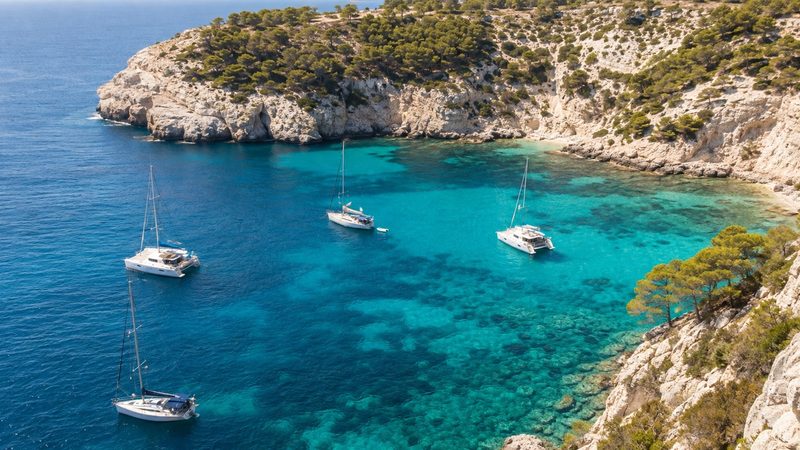
Planning a multi-cala day
Sa Calobra and Cala Tuent sit close enough together to combine in a single day from a Tramuntana-focused itinerary; Es Trenc suits a south-coast day on its own given the distance from the north-west. Check conditions with AEMET, Spain’s national weather service, before committing to an exposed north-west coast day specifically, since that stretch is more weather-sensitive than the sheltered south.
A late-morning start also helps on Tramuntana days specifically, since the coast can generate a noticeable afternoon sea breeze that builds through the day — arriving early and leaving before the breeze peaks makes for a more comfortable anchorage stay.Quick comparison
| Cala | Coast | Lo mejor para |
|---|---|---|
| Es Trenc | South | Calm, shallow water; families |
| Sa Calobra | North-west (Tramuntana) | Dramatic scenery, boat-only access advantage |
| Cala Tuent | North-west (Tramuntana) | Quieter alternative near Sa Calobra |
| Platja de Formentor | North | Pine-backed sand, turquoise water, longer sail |
| Cala Figuera | South-east | Working fishing village, onshore character |
| Puerto de Andraitx | West | Marina base, provisioning, evenings ashore |
Building your route
A week that mixes at least one dramatic Tramuntana stop (Sa Calobra or Cala Tuent) with a calm south-coast day (Es Trenc) and one onshore-focused stop (Cala Figuera or Port d’Andratx) covers the real range of what Mallorca’s coastline offers. See our sailing itineraries for full day-by-day routes, or go to plan your charter and tell us which of these you want to prioritise.
None of these anchorages requires an especially large or specialised yacht — the main planning variable is realistic sailing time between stops, not boat capability, so build your route around distances first and let the boat choice follow from your group size and preferred comfort level.
Questions about Mallorca's calas
Clear information before you plan your route.
Can I anchor directly at Sa Calobra?
Check for Posidonia coverage and any local mooring buoys before anchoring — see our anchoring rules guide for how to check before you drop anchor anywhere unfamiliar.
Is Es Trenc suitable for young children?
Yes — its calm, shallow water makes it one of the more family-friendly anchorages on this list.
How far is Sa Calobra from Palma by boat?
It is a longer sail up the west and north-west coast — realistic as a day trip but better combined with an itinerary based further north for the week.
Which cala has the best onshore facilities?
Port d’Andratx and Cala Figuera both offer real harbourside restaurants and services, unlike the more remote, undeveloped anchorages on this list.
Do these anchorages get crowded in peak season?
Yes, particularly Es Trenc and Sa Calobra — an early or late-day visit generally avoids the worst of the July–August crowds.
Tell us which calas matter most.
We will build an itinerary around your priorities.