A yacht charter can work well for families of almost any age, but a few decisions make the difference between a smooth week and a stressful one: the right boat and base, proper safety equipment, a plan for seasickness, and anchorages that give children room to swim and play safely. This guide covers each of these specifically for a family charter in the Balearics.
The short answer
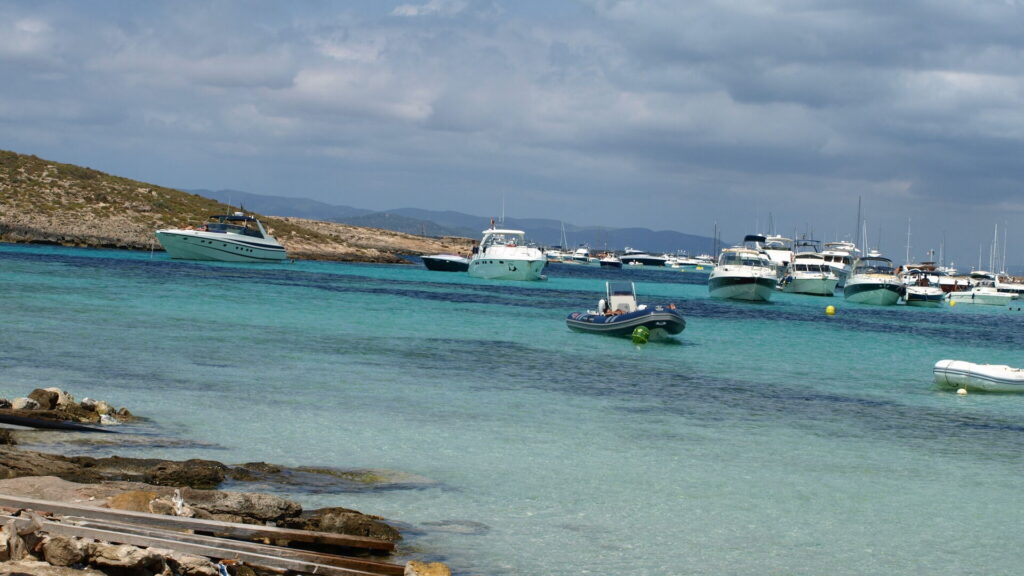
A catamaran on a calmer base like Mallorca’s south coast or Menorca, with a skippered charter rather than bareboat, is the lowest-friction setup for most families with young children. Older children and teenagers generally cope well with a wider range of boat types and more ambitious itineraries. The details below help you match the setup to your specific children’s ages and your group’s experience level.
Choosing the right boat and base
Catamarans are generally the most family-friendly boat type: their twin-hull stability means less rocking at anchor, and their wide deck and cockpit space give children room to move without feeling confined. See our catamaran charter page for the range available. Mallorca’s south coast and Menorca’s calmer anchorages tend to suit first-time family charterers best — see our Mallorca vs Ibiza comparison for how family-friendliness compares specifically. A skippered charter (see our bareboat or skippered guide) removes the workload of sailing from parents, freeing attention for the children instead.
Safety equipment for children
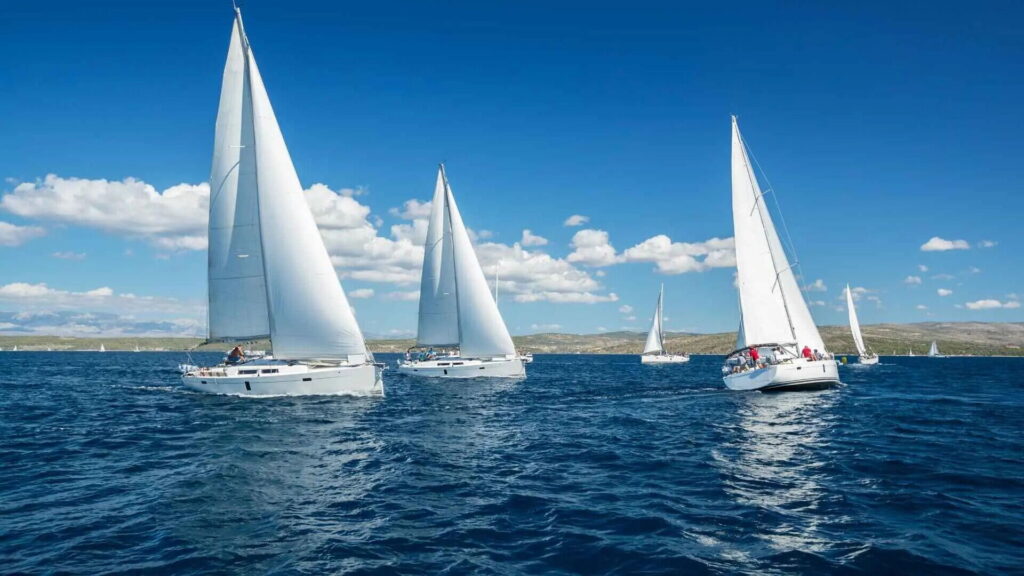
Spanish recreational boating regulation, set out in Royal Decree 339/2021 and enforced by the Dirección General de la Marina Mercante, requires appropriate safety equipment including life jackets aboard recreational boats. Confirm with your charter company that correctly sized children’s life jackets are aboard before you sail, and insist on them being worn at all times on deck for younger children, not just during specific manoeuvres. A reputable operator will have this covered as standard, but it is worth confirming explicitly rather than assuming.
It is also worth checking the boat’s guard rails and cockpit layout for younger children specifically — some yachts have higher toe-rails or enclosed cockpits that are noticeably safer for a toddler than an open, low-railed deck design.Preventing and managing seasickness
Motion sickness affects children more than adults in many cases, and boats can trigger it even in children who are fine in cars. The NHS recommends keeping children’s eyes on the horizon rather than on books or screens, getting fresh air, and trying ginger-based remedies as a first line of defence; a pharmacist can advise on suitable medication for longer crossings if needed. Building in calmer anchorage time rather than long continuous motoring legs also helps — see our sailing itineraries for routes with regular anchorage stops rather than long open-water passages.
Best anchorages for families
Shallow, sheltered, sandy-bottomed anchorages are the standout choice for families — Ses Illetes in Formentera is a consistently popular example, with calm, clear, shallow water that lets younger children swim confidently under supervision. Menorca’s Cala Macarella and Mallorca’s Es Trenc offer similar characteristics. Avoid anchorages known for exposed swell or fast currents when travelling with young children, and always check the seabed for Posidonia restrictions before anchoring anywhere unfamiliar.
Popular family beaches and their facilities are also listed by Illes Balears, the official Balearic tourism board, which is a useful cross-check when planning shore stops alongside your anchorage list.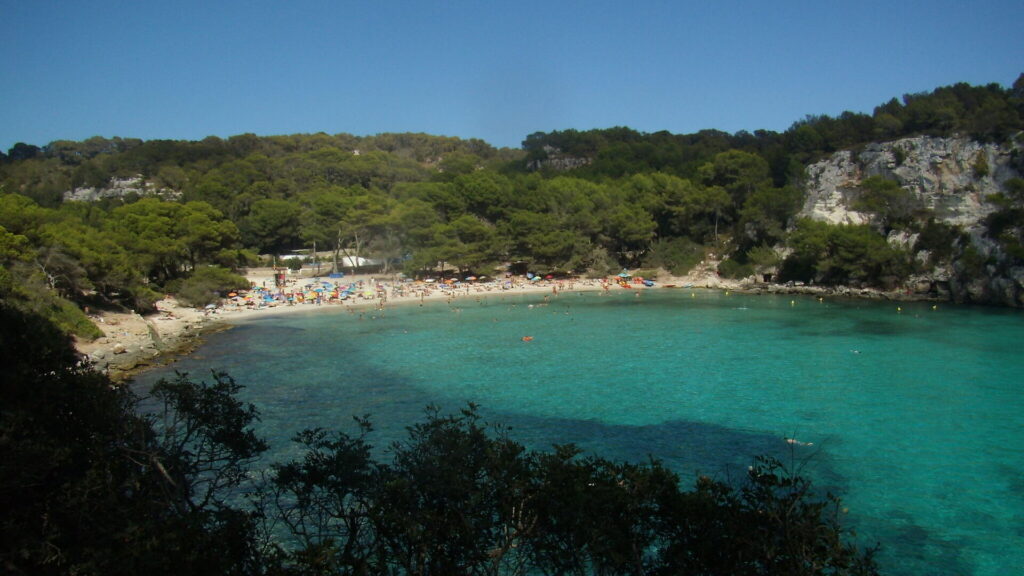
Onboard activities and entertainment
Many charter yachts carry snorkelling gear, paddleboards and inflatable toys as standard or optional extras — ask your operator what is included before booking rather than assuming. Simple activities like spotting marine life, helping (age-appropriately) with lines and fenders, and swimming stops every hour or two keep most children engaged far better than trying to occupy them with games designed for dry land.
Bring a simple identification card or app for local marine life — children often engage far more with spotting real fish and sea life than with any packed toy, and it turns swimming stops into a small educational activity rather than just downtime. A simple bucket-and-net set for rockpooling at anchor, packed from home, costs almost nothing and reliably occupies children for long stretches without needing anything the boat provides.Nap schedules and shade
Younger children still napping benefit from planning motoring or sailing legs around usual nap times, since the boat’s motion often helps rather than hinders sleep. Shade is essential — check that your yacht has a bimini or cockpit cover, and pack a sun tent or portable shade for the bow or deck areas if extended time in direct sun is likely, particularly around midday in peak summer months.
What to pack for kids
Beyond the general items covered in our first-time charter checklist, pack reef-safe sunscreen, a wide-brimmed hat, water shoes for rocky entry points, a properly fitted children’s life jacket if you have one you trust over the boat’s standard stock, and any seasickness remedy you plan to use, tested at home first rather than for the first time at sea.
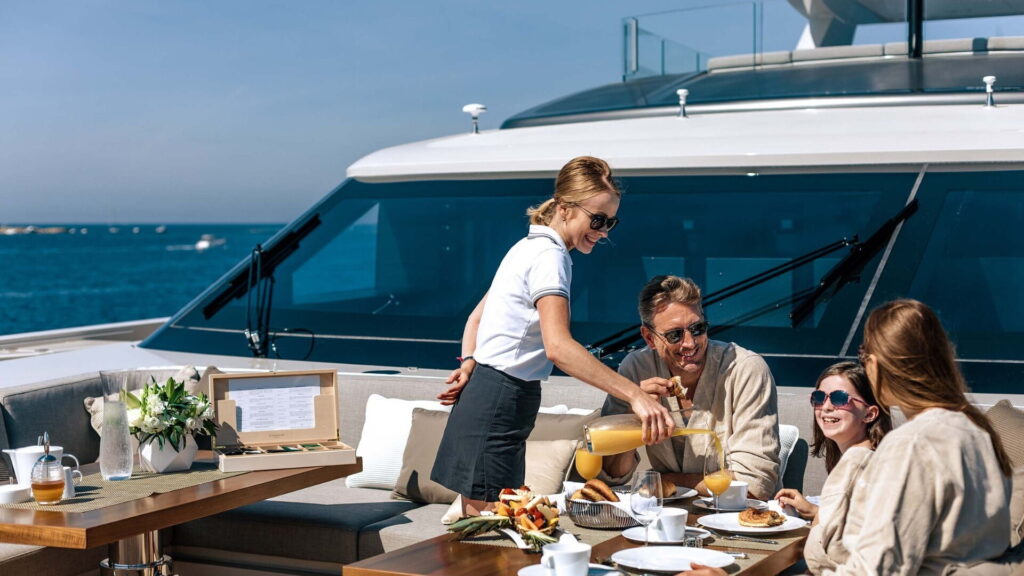
Age-band planning reference
| Age band | Key considerations |
|---|---|
| Under 3 | Nap scheduling, constant shade, life jacket fit, shortest legs between anchorages |
| 3–7 | Seasickness prevention, close supervision at anchor, simple onboard activities |
| 8–12 | Can help with light tasks, snorkelling and paddleboarding, longer legs manageable |
| Teenagers | Broadest range of boat types and itineraries suitable, minimal special planning needed |
Planning a smooth family week
The core of a good family charter is matching the boat, base and itinerary pace to your children’s ages rather than to an ambitious sailing plan. A stable catamaran, a skippered charter, calm shallow anchorages and a realistic pace cover most of what makes the difference. Go to plan your charter and tell us your children’s ages — we will suggest a boat and itinerary suited to your family specifically.
Resist the urge to over-plan the itinerary before you leave — the best family charters tend to build in slack for an extra swim stop, a shortened sailing leg after a rough morning, or simply staying an extra night somewhere the kids are enjoying rather than sticking rigidly to a pre-planned route.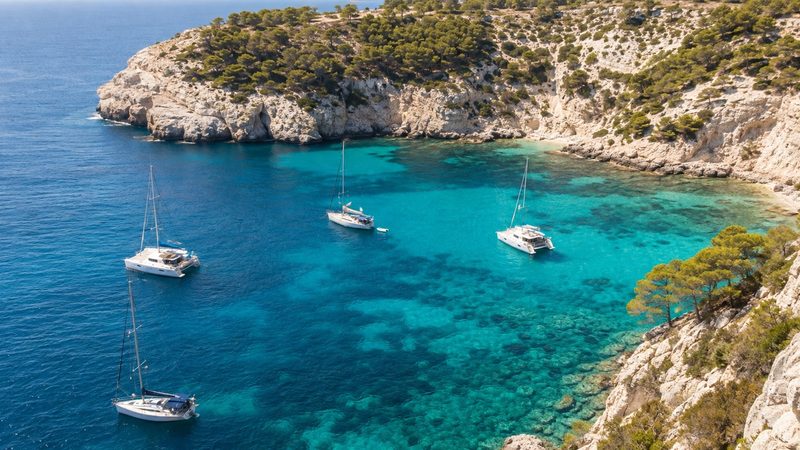
Questions about chartering with children
Clear information before you book a family charter.
What is the best boat type for a family with young children?
A catamaran, generally — its stability at anchor and open deck space suit young children better than a monohull sailing yacht in most cases.
Are life jackets provided for children?
Reputable charter companies carry a range of sizes, but confirm this explicitly before booking and check the fit yourself rather than assuming it will be correct.
How do I help a child who gets seasick?
Keep their eyes on the horizon, get fresh air, try ginger-based remedies, and ask a pharmacist about suitable medication for longer crossings ahead of time.
Which Balearic island is easiest for a first family charter?
Mallorca is generally considered the easiest first-charter island for families, thanks to its calmer south coast and larger, more varied fleet.
Should we choose bareboat or skippered with young children?
Skippered is usually easier with young children, since it frees parents from sailing duties to focus on supervision and entertainment instead.
Tell us your children's ages.
We will suggest the right boat, base and itinerary for your family.