The best time to sail the Balearics depends on what you are optimising for: warm water and long days point to July and August, while value, space at anchor and steadier planning point to June or September. This guide sets out what actually changes month by month — sea temperature, wind pattern, crowding at popular anchorages and typical charter pricing — so the choice is based on real trade-offs rather than a single generic recommendation.

- April and May: quiet water, cool sea
- June: the sweet spot begins
- July and August: peak season
- September: often the best time to sail the Balearics
- October: late-season calm
- Balearic sailing weather by month
- Choosing your dates around wind, price and crowds
- So, what is the best time to sail the Balearics for you?
April and May: quiet water, cool sea
Spring is the quietest stretch of the charter season. Air temperatures reach a comfortable 18–22°C and the islands are green after winter rain, but sea temperature is still cool — typically 16–19°C — so swimming is bracing rather than relaxing for most guests. Marinas and popular anchorages are close to empty, berths are easy to find without booking months ahead, and charter rates sit at their lowest point of the year.
This is a good window for guests who prioritise privacy and lower cost over long swim stops, and for routes that lean on coastal towns, Palma’s old town and the Tramuntana coast rather than all-day anchoring. It suits confident sailors, since spring is also when the Tramuntana wind is most likely to interrupt a plan — forecasts need checking daily, not just at departure.
June: the sweet spot begins
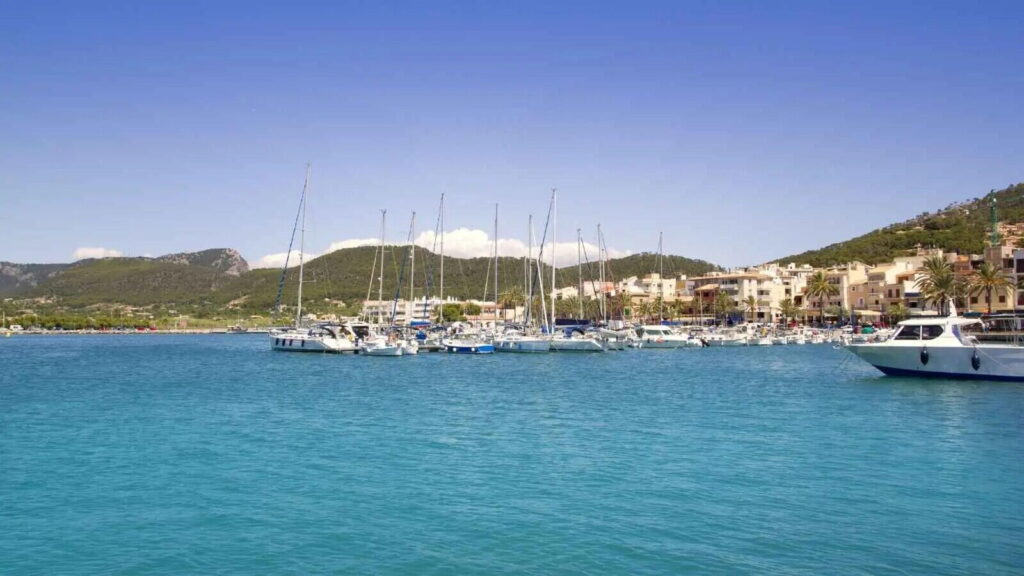
June is where most experienced Balearic charterers concentrate their bookings. Sea temperature climbs to a genuinely swimmable 22–23°C by late June, days are at their longest, and school holidays across Northern Europe have not yet started — so anchorages that are uncomfortably crowded in August still have room. Charter rates begin rising from the spring floor but remain well below the July–August peak.
Wind is generally more settled than spring, with the local afternoon sea breeze (the embat) becoming a reliable, moderate feature rather than a full Tramuntana event. This is a strong month for first-time bareboat charterers: warm enough to enjoy, calm enough to build confidence, and quiet enough that popular stops like Cala Macarella in Menorca are still pleasant rather than crowded.
July and August: peak season
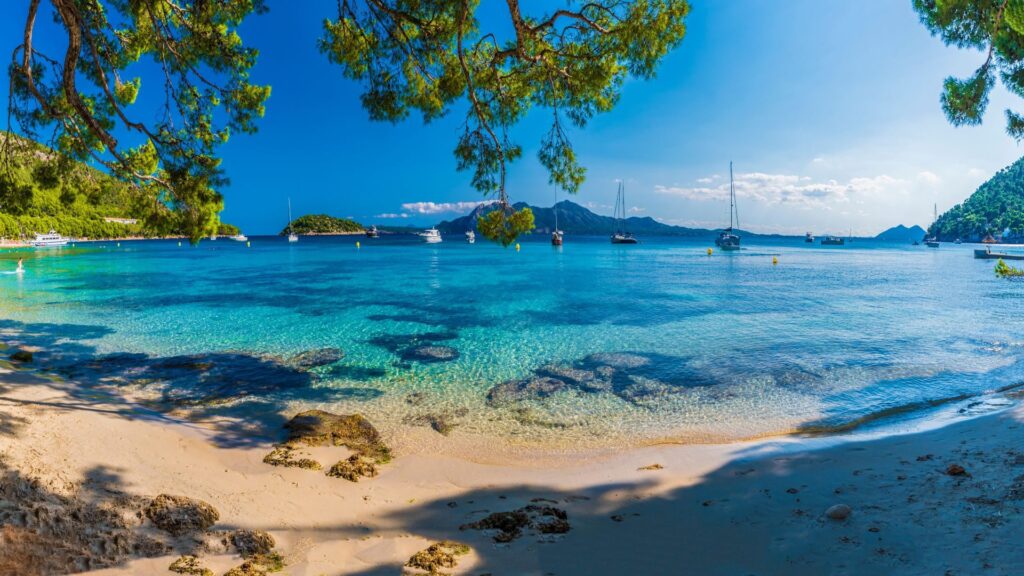
July and August are the warmest, busiest and most expensive months to charter in the Balearics — and for many groups, still the right choice. Sea temperature holds at 26–27°C, air temperature regularly passes 30°C, and long, stable days suit families and groups who want to spend most of the week in the water. This is also when marinas, fuel docks and popular anchorages such as Ses Illetes in Formentera reach their busiest, so early arrival at anchor and advance marina bookings matter far more than in shoulder season.
Charter prices peak in the first three weeks of August in particular; the same yacht that costs a spring rate in April can be considerably more expensive during the last week of July. Groups prioritising guaranteed warm water and full-day beach time over quiet anchorages and lower cost should plan around this window and book the yacht and marina slots early.
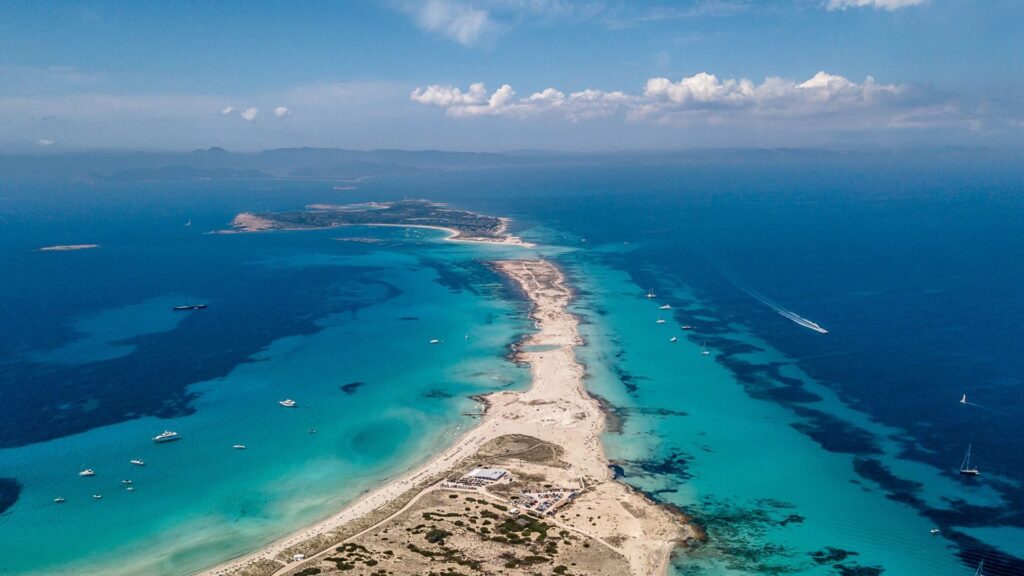
Practical tip for July and August: fuel docks and popular anchorages fill from mid-morning, so charterers who move early — departing by 8am rather than 11am — consistently get calmer water, shorter queues and a genuine choice of anchoring spot rather than whatever space is left by lunchtime.
September: often the best time to sail the Balearics
For many returning charterers, September is the best time to sail the Balearics: sea temperature is still a warm 24–25°C (the sea retains summer heat well into autumn), European school holidays have ended, and the crowds at anchor thin out noticeably from the second week onward. Charter rates fall from the August peak while conditions remain close to peak-season quality.
Wind patterns start shifting back toward the more variable spring/autumn pattern by late September, so route flexibility is still worth building in, but the trade-off — warm water, real space at anchor, lower prices — is why operators often see September availability disappear early among repeat clients.

October: late-season calm
October closes the practical charter season for most operators. Sea temperature drops to around 21°C — still swimmable for many guests, cooler for others — and air temperature settles into the low-to-mid 20s. Tramuntana activity increases again, closer to spring patterns, so weather-watching becomes part of daily planning rather than a background check.
Marinas and anchorages are at their quietest of the main season, and charter rates return close to the spring floor. October suits shorter, flexible itineraries with a built-in fallback plan more than a fixed seven-day route with a fixed final destination.
October charterers tend to fall into two groups: those chasing the lowest possible price for a flexible week, and experienced sailors who simply prefer a quieter Balearics to a crowded one and are comfortable adjusting a route around a forecast. If neither of those describes your group, September remains the safer late-season choice — it keeps most of October’s calm while staying closer to summer conditions, which is again why September is so often named the best time to sail the Balearics by people who have chartered here more than once.
How the four islands differ within the season
The best time to sail the Balearics is not identical on every island, even though the overall pattern — cool spring, warm settled summer, mild shoulder autumn — holds across the archipelago. Mallorca is large enough that its Tramuntana (north-west) coast stays more sheltered in summer than its wide, open bays, so it tends to feel calmer in July and August than the Ibiza party coast at the same time of year. Menorca, being flatter and more exposed, is more wind-affected outside the settled summer window, which is exactly why quiet, family-oriented charterers often choose it for June and September rather than spring.
Ibiza’s sailing season overlaps with its nightlife season, so anchorages near San Antonio and Ibiza Town are busiest precisely when the rest of the island is at its calmest sailing weather — July and August. Formentera, reached mostly as a day trip or short hop from Ibiza, is most rewarding from June to September when the shallow, turquoise water at Ses Illetes and Es Cavallet is at its clearest and warmest; outside that window the crossing itself becomes more weather-dependent. None of this changes the seasonal averages above, but it does mean the best time to sail the Balearics for a Menorca-based week can differ from the best time for an Ibiza-based one by several weeks in either direction.
Balearic sailing weather by month
The table below summarises the seasonal pattern described above in one place. For live conditions ahead of a specific charter week, check the official forecast rather than relying on seasonal averages alone — the AEMET forecast for the Illes Balears covers all four islands.
| Month | Sea temp | Typical wind | Crowd level | Charter price |
|---|---|---|---|---|
| April | 16–17°C | Variable, Tramuntana possible | Very low | Lowest |
| May | 18–19°C | Variable | Low | Low |
| June | 22–23°C | Settled, afternoon breeze | Moderate | Rising |
| July | 25–26°C | Settled, thermal breeze | High | Peak |
| August | 26–27°C | Settled, thermal breeze | Highest | Peak |
| September | 24–25°C | Settled, shifting late month | Moderate, falling | Falling |
| October | ~21°C | Variable, Tramuntana possible | Low | Low |
Typical ranges for planning purposes. Always check a live forecast (see AEMET link below) before finalising a route.
Choosing your dates around wind, price and crowds
Three factors move together across the season: wind reliability, anchorage crowding and price. Peak summer offers the most reliable warm weather but the least space and the highest cost. Shoulder months trade a small amount of weather certainty for space, price and, in September’s case, water that is still genuinely warm. Neither is objectively “better” — the right answer depends on whether the group values guaranteed heat and full days in the water above quieter anchorages and lower cost.
Regional tourism patterns matter too: the Illes Balears tourism board publishes seasonal visitor data that lines up closely with the crowding pattern described here, and it is a useful independent cross-check when planning outside peak season. For marina availability and berthing information at any time of year, Ports de Balears covers the public ports of Alcúdia, Ibiza, Mahón, Palma and La Savina directly.
Whichever window suits your group, the same rule applies across every month covered here: compare live options for your actual dates rather than assuming availability from a general guide — our charter yacht search reflects real, date-specific fleet availability across all four islands.
Lead time matters as much as month: the best-value weeks in June and September are also the ones repeat charterers book first, often four to six months ahead, precisely because word has gotten around that they offer summer conditions without summer crowds. Peak August dates can sometimes still be found closer to departure simply because more inventory is allocated to that window, not because demand is lower.
Families with school-age children are naturally constrained to July, August and the edges of June and September; groups without that constraint have the most to gain from shifting even two or three weeks away from the peak, since the difference in crowding and price is often larger than the difference in weather.
So, what is the best time to sail the Balearics for you?
If long days, guaranteed warm water and lively marinas matter most, July and August deliver that reliably — at the highest price and with the most crowding. If value, space at anchor and a quieter week matter more, June and September consistently offer the best balance, with September edging ahead for many repeat charterers because the sea is still warm once the crowds have thinned. Spring and October reward flexible, experienced sailors willing to work around more variable wind for the lowest prices and the quietest anchorages of the year.
For a deeper look at how these seasonal factors interact with route planning, see our seven-day Palma to Cabrera itinerary, and for how charter style changes what a given week costs, our guide to bareboat or skippered charter covers the other half of the planning decision.
Questions about Balearic sailing seasons
Clear information before you choose your charter dates.
What is the single best month to sail the Balearics?
There is no single answer — September is often cited as the best time to sail the Balearics for value and warm water together, while August suits groups who want guaranteed heat and accept higher prices and crowds.
Is the water warm enough to swim in April or May?
It is swimmable for many guests at 16–19°C, but noticeably cooler than summer. Most charterers who prioritise swimming choose June onward instead.
When are charter prices lowest?
April, May and October carry the lowest rates of the practical season, since demand and crowding are also at their lowest in those months.
Does the Tramuntana wind affect the whole season?
It is most active in spring and autumn and generally quieter in July and August, when the local afternoon sea breeze dominates instead. Always check a live forecast before departure regardless of month.
Which month has the least crowded anchorages?
April and May are quietest, followed closely by October. Late September also thins out noticeably compared with peak August.
Ready to pick your charter week?
Tell us your preferred season and what matters most — warm water, quiet anchorages or the lowest price — and we will narrow the credible options for those dates.