Do you need a licence to rent a boat in Spain? For a bareboat charter — sailing without a hired skipper — yes: Spanish law requires whoever is at the helm to hold a recognised nautical qualification matched to the boat’s size and power. For a skippered charter, no personal licence is required at all, since the professional skipper aboard carries that responsibility instead. This guide covers which qualifications count, what operators actually check, and what to do if you do not hold one.
The short answer
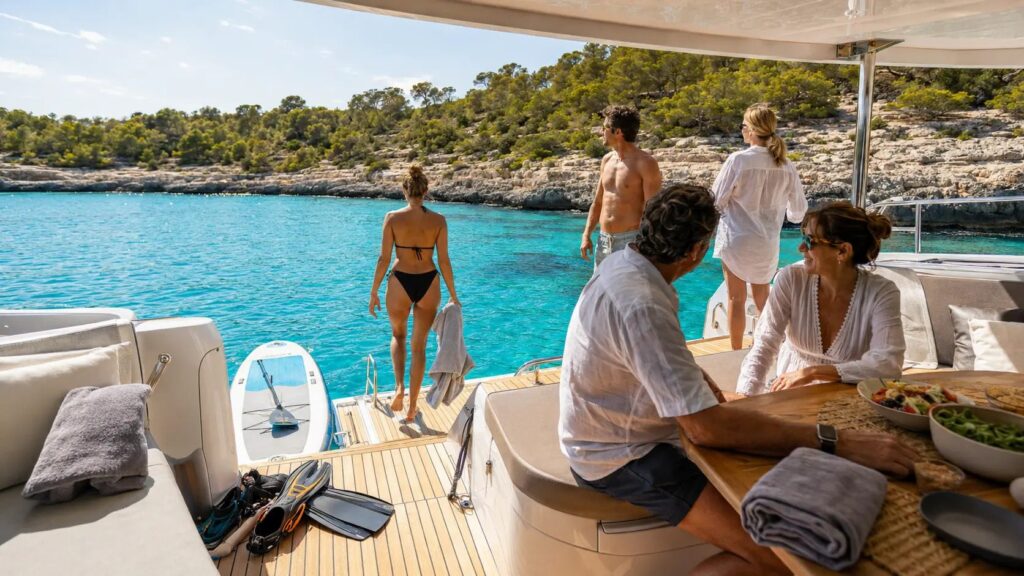
If you plan to be the person at the helm on a bareboat charter, yes, you need a licence — a nautical qualification recognised by the charter company and matched to the specific boat’s length and engine power. If you plan to hire a skipper for the week, no, you personally need nothing: the skipper holds the required professional qualification and the responsibility sits with them, not you. Our bareboat or skippered charter guide covers the wider decision beyond the licence question alone.
There is no grey area here worth gambling on: operators check documents specifically because an unqualified skipper voids insurance cover, so treat the licence question as settled before you compare boats, not after.
Spanish qualification tiers
Spain regulates recreational boating qualifications in tiers matched to boat size, engine power and distance from shore, set out in full by the Dirección General de la Marina Mercante and the underlying regulation, Real Decreto 875/2014. The entry-level Licencia de Navegación (the qualification that replaced what boat renters commonly called the “titulín”) covers small motorboats close to shore; the PER (Patrón de Embarcaciones de Recreo) covers larger yachts and greater range, including inter-island passages in the Balearics.
Exact size, power and distance limits are periodically updated by regulation — always confirm current limits against the official source above rather than a fixed number here, since a guide page cannot track every regulatory change in real time.
These tiers exist specifically because Spain treats boat handling as a graduated skill, the same way driving licences scale from small motorcycles to heavy vehicles. A qualification issued for a small motorboat close to shore does not automatically extend to a 40-foot sailing yacht crossing open water between islands — the scope is written into the qualification itself, and operators are trained to check it rather than take a charterer’s word for it.
| Qualification | Typical scope | Who needs it |
|---|---|---|
| Licencia de Navegación | Small motorboats, close to shore | Spanish residents renting small boats |
| PER (Patrón de Embarcaciones de Recreo) | Larger yachts, greater range incl. inter-island | Spanish residents renting standard charter yachts |
| RYA ICC (or national equivalent) | Matched to the issuing scheme's scope | Foreign sailors, most common for Balearic bareboat charter |
| Professional skipper qualification | Commercial charter | Held by the skipper, not the charterer, on skippered bookings |
Balearic-specific considerations
The Balearics add one wrinkle worth knowing about: several popular routes cross open water between islands — Mallorca to Menorca, or Ibiza to Formentera, for instance — which typically calls for the broader PER qualification rather than the entry-level Licencia de Navegación, even on a modestly sized yacht. If your planned route stays within a single island’s coastal waters, a lower tier may suffice; check your specific itinerary against your qualification’s scope before assuming either way.
This is one more reason route planning and licence planning happen together, not separately — our Palma to Cabrera itinerary and other Balearic routes each imply a minimum qualification tier through the waters they cross.
What foreign sailors need instead
Most charterers arriving from outside Spain present the RYA International Certificate of Competence or an equivalent qualification issued by their home country’s recognised sailing authority. Balearic charter operators generally accept the ICC for a bareboat charter on a matching-size yacht, but acceptance is set by each individual operator, not guaranteed nationwide — always confirm with the specific charter company before assuming your qualification will be accepted on their fleet.
Bring the physical certificate (or a verifiable digital copy) along with a sailing résumé or logbook showing recent experience on a similar-sized yacht. Operators use both together to judge readiness, not the certificate alone.
Sailors from outside the UK typically present their own national equivalent — Germany’s Sportbootführerschein, France’s permis bateau, or a similar scheme recognised under international reciprocal arrangements. The principle is the same regardless of country of issue: the certificate must cover the size and type of boat you intend to charter, and the operator makes the final call on whether to accept it.
What operators actually check
At handover, expect the charter company to ask for the physical qualification card or certificate, a form of photo ID matching the name on it, and often a short verbal or practical assessment — docking the boat in the marina, for instance — before releasing the keys. This is standard practice, not a sign of distrust, and it protects both the charterer’s deposit and the boat itself.
A second capable crew member is sometimes requested even when the primary sailor is fully qualified, particularly on larger yachts or catamarans, since Balearic marinas can be tight and busy in peak season.
Arrive at the handover with time to spare rather than rushing straight from the airport — a checked-in group under time pressure is more likely to have a rocky verbal assessment than one that has had a chance to settle in first. Some operators will reschedule the practical check to the following morning if a late arrival makes it impractical the same day.

If you do not have the right licence
The straightforward option is to hire a professional skipper for the charter — it removes the licence requirement entirely and is available on almost every yacht in the Balearic charter fleet. Our skipper hire cost guide sets out typical day rates and what the fee includes, so you can budget for it alongside the yacht itself.
This is also the most common choice for first-time charterers generally, regardless of licence status — many qualified sailors choose a skipper for their first Balearic week simply for the local knowledge, then consider bareboat on a repeat visit.
Booking a skipper does not mean giving up control of the week entirely. Most skippers are happy to hand over the helm for stretches of open, uncomplicated water once they have seen you sail, while still being the one accountable for anchoring, mooring and the calls that matter — a practical middle ground many first-time charterers do not realise is available until they ask.
Common misconceptions
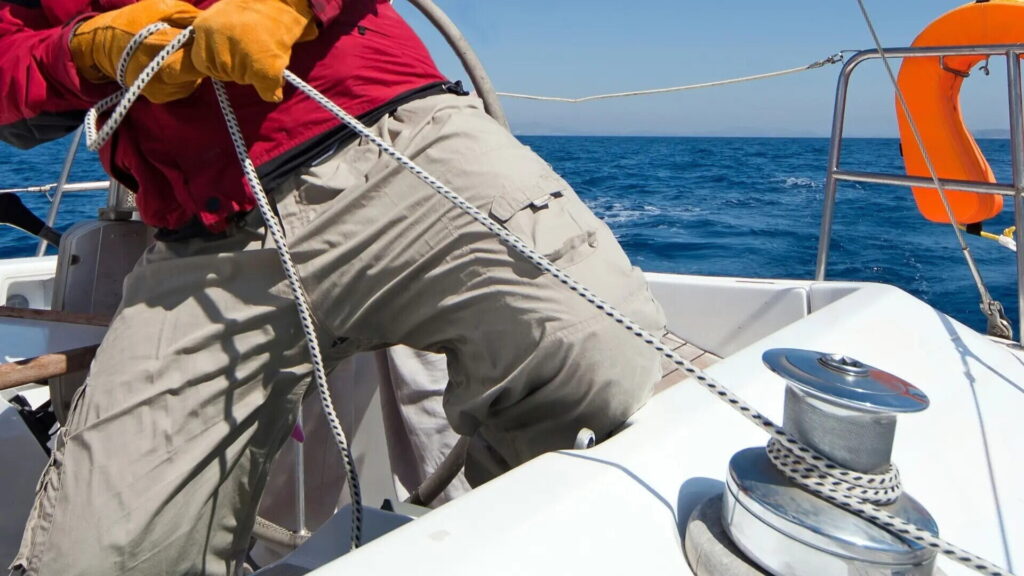
A car driving licence does not count, in Spain or anywhere else — it has no bearing on boat qualifications and no operator will accept it as a substitute. Holding a qualification for one size or type of boat does not automatically cover a larger or different one; the licence must match the specific yacht’s length and engine power, which is exactly what operators check at handover. And a qualification earned years ago without any logged experience since can raise questions even if it is technically still valid — recent hours on a similar boat strengthen your case considerably.
Another frequent misunderstanding: assuming that because a friend or family member holds a qualification, the whole group is covered. Only the individual named on the booking as skipper needs to hold the qualification and be aboard as the acting skipper throughout — but if that person cannot travel for any reason, the charter’s legal footing changes and the company needs to know in advance, not on the dock.
Finally, a qualification from years ago that has technically never expired is not automatically a green light either — recency and logged practice matter as much as the paper itself.
Getting qualified before your trip
If you do not currently hold a qualification and want to bareboat charter on a future trip, most sailing schools in the UK, Ireland and elsewhere in Europe offer ICC assessment courses that combine a few days of practical sailing with a competence check, often bookable months in advance of a planned charter. This is not something to arrange the week before departure — realistic lead time is at least a few weeks, and popular course dates fill up during the spring ahead of the summer charter season.
If your trip is close and a course is not realistic, hiring a skipper remains the practical answer for this year, with bareboat as an option to plan properly for next time.
Look for a course accredited by a recognised national sailing authority rather than an informal weekend arrangement — the certificate needs to be one Balearic operators actually recognise, and an accredited school will confirm this upfront. Many people combine the course with a short sailing holiday elsewhere first, building logged hours before their Balearic charter rather than arriving with a certificate and no practical time behind it.

So, do you need a licence?
Yes, if you intend to skipper a rented yacht yourself in Spain — a recognised, boat-matched qualification is a legal requirement, not a formality operators can waive. No, if you book a skippered charter, since the requirement transfers to the professional skipper aboard. Decide which arrangement fits your group’s experience and budget first, using our bareboat or skippered comparison, then confirm the specific documents your chosen operator needs well before departure.
Ready to compare boats either way? Browse our charter yacht search or start an enquiry and we will confirm exactly what your qualification covers on the boat you have in mind.
Whichever path you take, sort out the qualification question weeks before departure, not at the marina desk.
Questions about boat licences in Spain
Clear information before you commit to a bareboat booking.
Does a car driving licence count as a boat licence?
No. A car licence has no bearing on nautical qualifications anywhere, including Spain. Operators will not accept it as a substitute under any circumstances.
Is the RYA ICC accepted everywhere in the Balearics?
Most operators accept it for a matching-size yacht, but acceptance is set by each company individually. Confirm with your specific charter operator before booking.
What is the easiest option if I do not have a licence?
Hire a professional skipper. It removes the licence requirement entirely and is available on almost every yacht in the Balearic charter fleet.
Can I get a qualification quickly before my trip?
Some sailing schools offer fast-track ICC courses, but realistic lead time is a few weeks at minimum. If your trip is imminent, a skipper is the practical answer this time.
Does the licence need to match the specific boat?
Yes. Qualifications are scoped to boat length and engine power, and operators check this at handover, not just whether you hold any licence at all.
Tell us your experience level and we will match a charter style.
Whether you are fully qualified or need a skipper, we will confirm exactly what your chosen boat requires.