Skipper hire cost in the Balearics typically runs €150–€220 per day, or roughly €1,000–€1,500 for a standard week on a 40–46ft yacht — but the fee itself is only part of the real cost, since food, a cabin and a customary tip usually sit on top. This guide sets out what a skipper actually does, what a typical rate covers, what is charged separately, and how the decision compares with bareboat chartering on both cost and experience.
- What a professional skipper actually does
- Typical skipper rates in the Balearics
- When a skipper is required, not optional
- What the fee includes — and what does not
- Skipper hire cost vs bareboat charter
- What changes the price
- Tipping and other informal costs
- Booking directly vs through the company
- Is hiring a skipper worth the cost?
What a professional skipper actually does
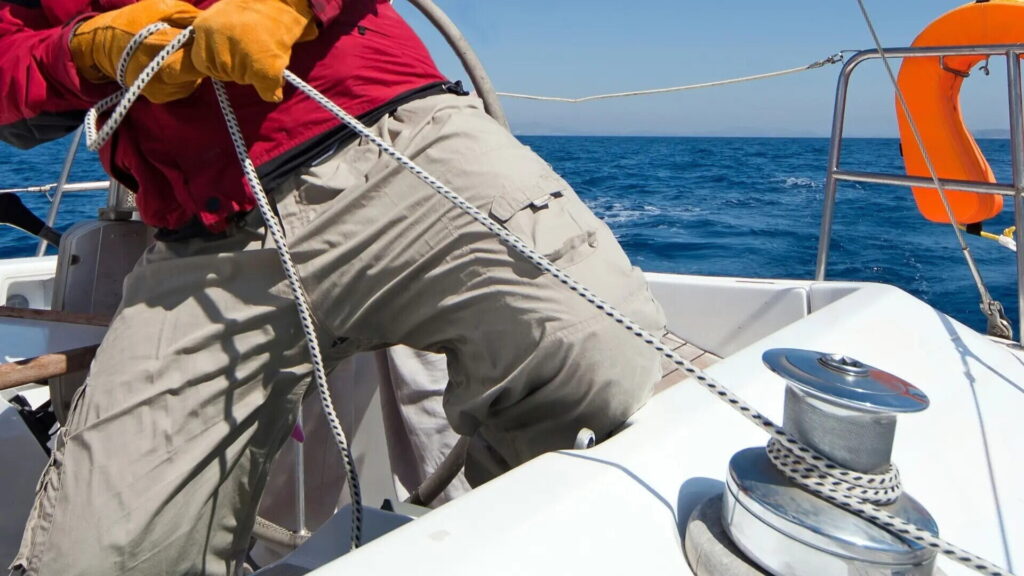
A professional skipper is responsible for the safe operation of the yacht: passage planning, anchoring, mooring, handling the boat in wind and traffic, and making the real-time calls that keep a week enjoyable rather than stressful. On most Balearic charters the skipper also acts as a local guide — suggesting anchorages based on the day’s forecast, handling marina paperwork, and managing the handover process with the charter company at both ends of the week.
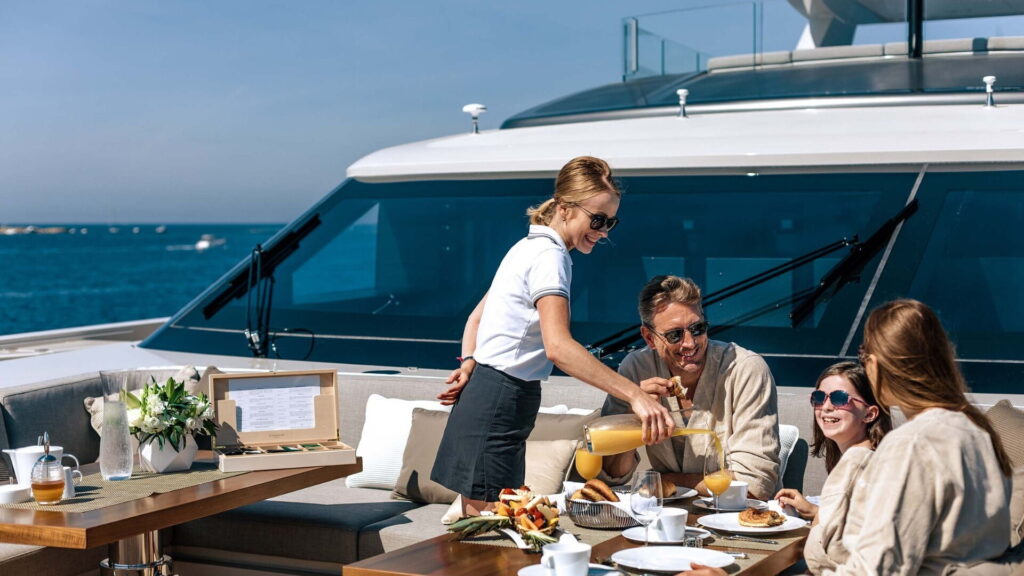
What a skipper is generally NOT expected to do: cook every meal, clean cabins daily, or act as a full-service steward — those are the responsibilities of a separate hostess or crew member on a fully crewed yacht, a different (and more expensive) booking category entirely from a single hired skipper.
A typical day with a hired skipper starts before the group wakes: checking the forecast, confirming the day’s anchorage against wind direction, and prepping the boat for departure. Through the afternoon the skipper handles anchoring and re-anchoring as conditions or crowding change, and in the evening manages the approach to a marina or the choice of an overnight anchorage. None of this needs managing by the charterers — that operational buffer, more than the physical act of steering, is what the fee is paying for.
Typical skipper rates in the Balearics
Daily rates for a professional skipper in the Balearics typically run €150–€220, with the figure depending on the size and complexity of the yacht, the season, and whether the skipper is engaged directly or arranged through the charter company. A standard week (6–7 days) on a 40–46ft monohull or catamaran commonly lands at €1,000–€1,500 in skipper fees alone, before food, accommodation and tip.
Rates soften outside the July–August peak, and multi-week bookings often carry a modest per-day discount since the skipper avoids the turnover work of starting a new group each week. It is reasonable to ask an operator whether a lower rate applies for a 10-day or two-week charter, or for a late-availability booking inside two weeks of departure — neither is guaranteed, but both are common enough to be worth a direct question before accepting the first figure quoted.
| Yacht size / type | Typical daily rate | Typical 7-day rate |
|---|---|---|
| Up to 40ft monohull | €150–€180 | €1,000–€1,200 |
| 40–46ft monohull or catamaran | €170–€220 | €1,150–€1,500 |
| 46–55ft catamaran | €200–€260 | €1,350–€1,750 |
| Motor yacht, similar length | €200–€280 | €1,400–€1,900 |
Indicative ranges for planning purposes; always confirm the exact fee with the operator for your specific boat and dates.
When a skipper is required, not optional
Bareboat charter — sailing without a hired skipper — requires at least one crew member to hold a recognised boating qualification accepted by the charter company, along with demonstrable experience on a similar-sized yacht. Guests without that qualification, or a group that simply prefers not to be responsible for the boat, need a skipper by default rather than by choice. Qualification requirements and what operators accept are covered in full in our boat licence requirements in Spain guide. Official qualification requirements are set out by Spain’s Dirección General de la Marina Mercante, and UK-based sailors can check whether their RYA International Certificate of Competence is accepted before assuming a skipper is unnecessary.
Some charter companies also require a skipper on larger or higher-value yachts regardless of the charterer’s qualifications, as a condition of insurance — this is worth confirming at the time of booking rather than assuming bareboat is available on every boat in the fleet.
What the fee includes — and what does not
The skipper fee itself covers their time and expertise for the charter period. It typically does NOT include: food and drink for the skipper (charterers are usually expected to provide meals or a food budget), a private cabin or sleeping space aboard, transport to and from the boat at the start and end of the charter, or fuel and mooring fees incurred while under the skipper’s direction (those are charged to the charter as a whole, not specific to having a skipper aboard). Ask the operator to confirm exactly what is and is not included before booking, since practice varies between charter companies.
Cancellation terms for the skipper fee typically mirror the charter company’s own cancellation policy rather than running on a separate schedule, but this is not universal. If your dates are weather-dependent or your group’s plans are still firming up, ask specifically how the skipper fee is treated if the whole charter is rescheduled or cancelled, since a small number of operators book skippers independently and apply a stricter, non-refundable term to that portion of the cost.
Skipper hire cost vs bareboat charter
Adding a skipper to a standard week typically adds €1,000–€1,500 to the base charter cost once food and tip are accounted for — a meaningful increase on a mid-range yacht, proportionally smaller on a high-end catamaran or motor yacht. In exchange, the group gains a qualified local operator, removes the licence requirement entirely, and usually sails a more ambitious route than a first-time bareboat crew would attempt. Our bareboat or skippered charter guide compares the two arrangements in full, covering responsibility, privacy and the kind of week each one creates beyond the cost difference alone.
The comparison is not purely financial. A skippered week tends to cover more ground with less second-guessing — anchorages get chosen with local knowledge rather than trial and error, and time lost to a wrong call on weather or a mishandled mooring is largely eliminated. Groups weighing the extra cost against a bareboat week should weigh it against that time and confidence, not only against the euro figure on the quote.

What changes the price
Four factors move skipper hire cost up or down: yacht size and complexity (a 55ft catamaran with two engines and more sail area costs more to skipper competently than a 35ft monohull), season (peak July and August rates run higher than shoulder-season rates, following the same demand pattern covered in our seasonal sailing guide), route ambition (an itinerary with technical anchorages or a national park permit, like Palma to Cabrera, can command a modest premium over flat coastal cruising), and language (a skipper fluent in your group’s language may cost slightly more than a Spanish-only skipper on some fleets).
Marina and mooring fees along the route, listed by Ports de Balears, also factor into a skipper-led itinerary that visits more marinas than a simple coastal loop.
Tipping and other informal costs
A tip of roughly 5–10% of the skipper fee is customary in the Balearics for good service, though it is never compulsory and should reflect the actual experience delivered. Beyond the tip, budget for the skipper’s meals (either shared with the group or a small daily food allowance), and confirm in advance whether the skipper sleeps aboard or ashore — sleeping aboard is standard on most charters but occasionally needs arranging separately on very small yachts with no spare berth.

Booking a skipper directly vs through the charter company
Two paths lead to the same skipper: booking through the charter company that owns the boat, or arranging a skipper independently and bringing them to a bareboat charter. Booking through the company is simpler in almost every case — the skipper already knows the specific boat, the company handles the paperwork and insurance implications, and the fee is usually itemised alongside the charter cost from the start rather than negotiated separately.
Arranging a skipper independently can occasionally cost less, particularly in shoulder season when local skippers have more availability, but it shifts responsibility for vetting experience and confirming insurance cover onto the charterer. For a first booking, going through the company listed on our charter companies directory is the lower-risk route; independent arrangement suits repeat charterers who already know a skipper’s work from a previous week.
Is hiring a skipper worth the cost?
For first-time charterers, families with children, or any group without a confidently qualified sailor aboard, skipper hire cost is generally worth paying: it removes the licence requirement, adds local knowledge of anchorages and weather, and turns the week into a guided experience rather than a self-managed one. For experienced sailors with the right qualification, bareboat charter delivers a materially lower cost and full independence, at the price of being responsible for every decision aboard.
Whichever arrangement suits your group, compare real, current skipper availability alongside the yacht itself — our charter yacht search shows which boats offer skippered options for your dates, and our enquiry form can confirm an exact skipper fee for your preferred boat before you book.
There is also a middle path worth knowing about: some groups hire a skipper for the first two or three days to handle unfamiliar waters and a technical anchorage or two, then continue bareboat once everyone is comfortable with the boat and the area. Not every charter company offers this split arrangement, but it is worth asking about directly if your group sits between the two categories rather than clearly in one.
Whatever you decide, confirm the skipper hire cost in writing before the balance payment is due, not on arrival at the marina.
Questions about skipper hire cost
Clear information before you budget for a skippered charter.
Is the skipper fee included in the advertised charter price?
Rarely. Most charter listings show the bareboat rate; skipper hire cost is added separately and should be confirmed before booking if you need one.
Do I need to feed and accommodate the skipper?
Yes, typically. Food and a sleeping space aboard are usually the charterer’s responsibility on top of the daily or weekly fee.
Can I switch from bareboat to skippered after booking?
Often, subject to skipper availability for your dates. Ask as early as possible, since good skippers get booked up in peak season.
Is a skipper worth it for a one-week family charter?
For most families without a qualified sailor aboard, yes — it removes the licence requirement and adds local knowledge that shapes a smoother week.
Do Balearic skippers speak English?
Most professional skippers working charter fleets speak English; many also speak German or French. Confirm language needs with the operator when booking.
Want an exact skipper quote for your dates?
Tell us your preferred boat and week, and we will confirm real skipper availability and cost alongside the charter itself.