What is included in a yacht charter price? The advertised rate covers the yacht itself, standard equipment and insurance — but almost every Balearic charter adds several costs on top: an Advance Provisioning Allowance (APA) for food and fuel, a refundable security deposit, and sometimes local taxes. This guide breaks down exactly what sits inside the headline price and what you should budget for separately, so the final invoice never surprises you.
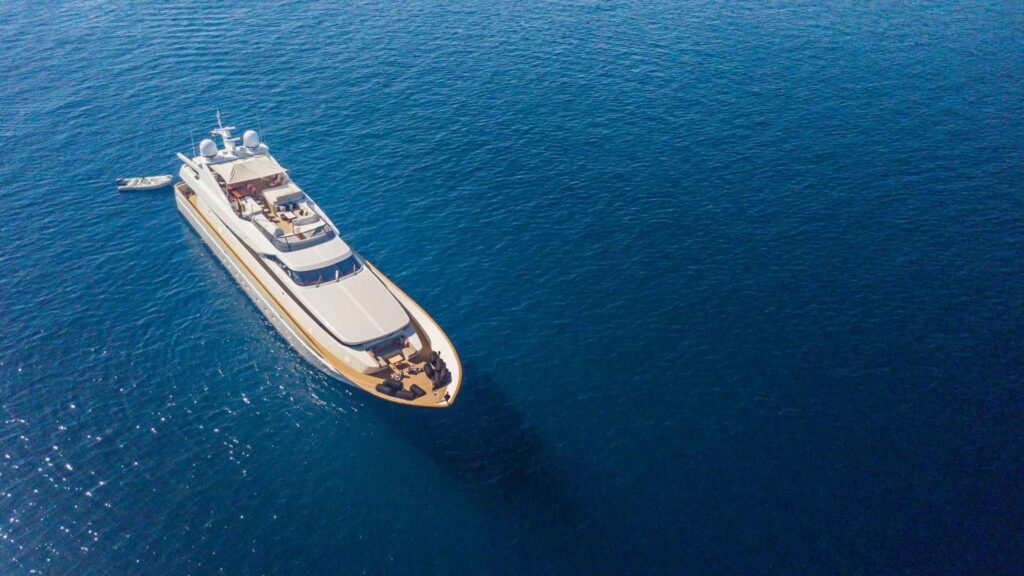
What is always included
The advertised charter rate covers the yacht itself for the booked dates, its standard safety and navigation equipment, and third-party liability insurance. On a skippered charter, the crew’s professional fee is bundled into what the charter company quotes as the “skippered rate” in most cases — though it is always worth confirming this explicitly, since our skipper hire cost guide shows it is sometimes itemised separately instead.
Standard equipment generally means safety gear required by maritime regulation, basic navigation electronics, and the yacht’s fitted amenities as listed on the specification sheet — not extras like paddleboards, snorkelling gear or a dinghy with a powerful outboard, which some operators include and others charge for separately. Always check the specific inclusions list for the yacht you are considering rather than assuming every boat in a fleet is equipped identically.
Cleaning at the end of the charter is another item worth clarifying at booking: some operators fold a standard end-of-charter clean into the base rate, while others charge it as a fixed add-on. It is a small line item individually, but worth confirming alongside APA and deposit so your final settlement matches what you expected going in.
What is typically not included
Four costs sit outside the headline rate on almost every Balearic charter: the Advance Provisioning Allowance (food, drink and fuel), the refundable security deposit, marina and mooring fees along the route, and any local taxes that apply. None of these are hidden fees in the negative sense — they are standard industry practice Marina and mooring fees along a route, listed by Ports de Balears, are usually paid from the APA rather than the base charter rate. — but they do mean the number on the listing page is the starting point of your budget, not the total.
A useful way to think about it: the advertised rate answers “what does the boat cost,” while APA, deposit and taxes answer “what does this specific week aboard it cost.” Both questions matter, but only the first one shows up on a comparison listing, which is exactly why so many first-time charterers are surprised by the gap between the number they saw online and the total they actually pay.
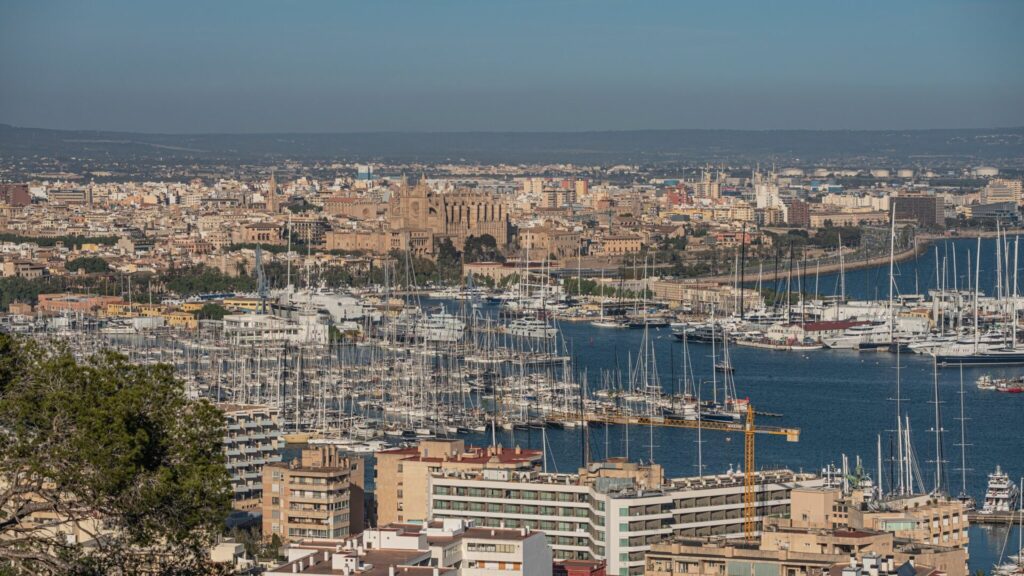
Understanding the APA
The Advance Provisioning Allowance, or APA, is an advance payment transferred to the crew before your charter to fund provisioning: food, drinks, fuel, port and mooring charges, and other running costs incurred on your behalf during the week. It is standard practice under the MYBA charter agreement, the industry-standard contract used across Mediterranean yacht charter, and typically runs 25–35% of the charter fee for sailing yachts and catamarans, slightly higher for motor yachts.
The crew keeps a running account of APA spending throughout the charter and provides it to you at the end of the week. Any unused balance is refunded; if costs run over (an unusually fuel-heavy itinerary, for instance), you settle the difference before departure. Ask for the running total partway through the week if you want to track spending rather than being surprised either way at the end.
APA exists because provisioning needs vary enormously between charter groups — a week of simple onboard meals costs very differently from a week eating ashore every night, and fuel consumption depends heavily on how far and how fast a group wants to travel. Rather than guess at a single average and build it into every yacht’s advertised rate, the industry separates this variable cost out and lets the crew spend exactly what your group’s choices require, refunding what is not used.
If you want tighter control over provisioning costs, discuss your preferences with the crew before the charter starts — a group happy with simpler meals and modest fuel use can often bring the effective APA percentage down from the higher end of the typical range.
Why charter pricing is structured this way
It can feel like an unnecessary complication to separate the yacht rate from APA, deposit and taxes rather than quoting one all-in number, but the structure protects both sides. Charterers only pay for the food, drink and fuel their own group actually consumes rather than subsidising a fixed average baked into every booking, and operators are not left absorbing the cost difference between a frugal group and one that eats ashore every night. The MYBA charter agreement standardised this structure decades ago across the Mediterranean specifically because it is fairer than the alternatives it replaced, not because it benefits one side more than the other.
Understanding this upfront changes how you read a listing price: it is a genuine starting point set by the boat itself, not a lowball figure designed to be padded later.
The security deposit
Separate from the APA, a refundable security deposit is blocked on a card (or occasionally paid in cash) at check-in to cover any damage to the yacht during your charter. On a bareboat charter, this deposit tends to be higher, reflecting the charterer’s full responsibility for the boat; on a skippered charter, it is often reduced since the professional skipper carries more of that responsibility. Deposit amounts vary significantly by operator and yacht value — ask for the specific figure before booking, not after.
Some operators offer an optional damage waiver, similar in concept to rental car insurance, that reduces your exposure on the deposit in exchange for a modest fixed fee. This is worth asking about directly, particularly for a first-time bareboat charter where an inexperienced crew carries more risk of a costly mooring mishap than a group that has chartered before.
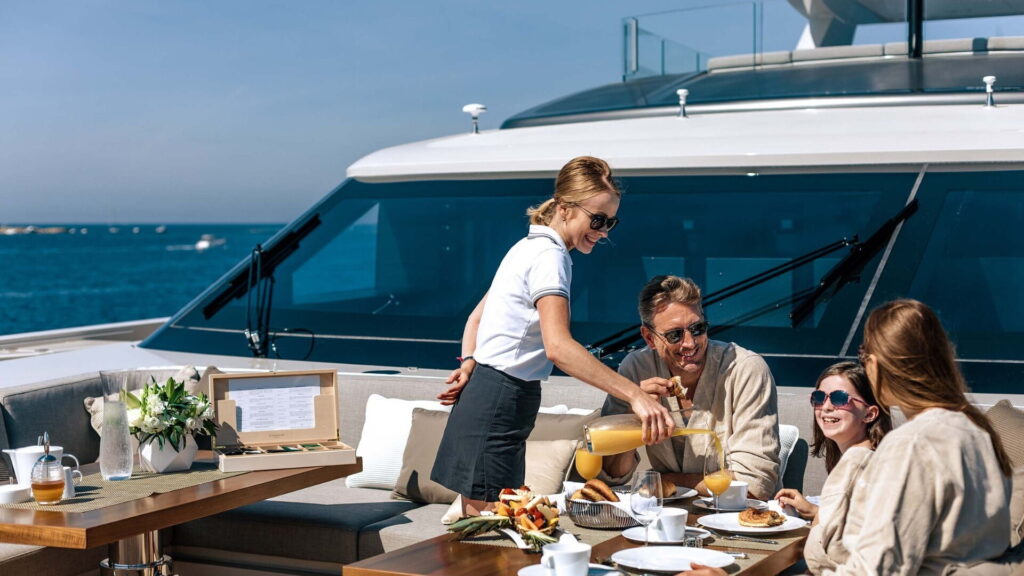
Local taxes and fees
Spanish VAT (IVA) on the charter fee is generally built into the advertised price for charters starting in Spain, rather than added afterward — but always confirm this explicitly with the operator rather than assuming. Separately, the Balearic Islands levy the Impuesto de Turismo Sostenible (the regional “eco-tax”), a per-person daily charge on tourist stays, administered by the Govern de les Illes Balears. Its application to charter passengers specifically (as opposed to hotel stays) varies, so confirm current scope and rate with your charter company rather than assuming it is or is not included.
Neither of these taxes is unique to yacht charter — they apply broadly across Balearic tourism — but they are easy to overlook when comparing a charter quote against a fixed all-inclusive package holiday. Build a small buffer into your budget for local taxes even if the operator quotes them as minor, since the exact treatment can differ from one booking to the next.
A sample cost breakdown
| Cost item | Typically included? | Rough guide |
|---|---|---|
| Yacht + standard equipment | Yes | The advertised rate |
| Third-party insurance | Yes | The advertised rate |
| APA (food, drink, fuel) | No — paid in advance | 25–35% of the charter fee |
| Security deposit | No — refundable | Varies by yacht value |
| Skipper fee (if not bundled) | Sometimes | €150–€220/day |
| Local eco-tax | Rarely | €2/person/day, confirm scope |
These figures are indicative, not a quote for any specific yacht — use them to sanity-check a listing price against your total likely spend, and always confirm the exact breakdown with the operator before paying a deposit.
A group booking a mid-range 42-foot sailing yacht at €3,000 for the week, for example, should realistically plan for roughly €750–€1,050 in APA on top, plus a deposit in the low thousands that is returned intact if the week passes without incident. That total, not the €3,000 headline figure alone, is the number to compare against your actual holiday budget.
Questions to ask before you book
Before committing to a booking, ask the operator directly: what percentage APA applies to this specific yacht, whether the skipper fee (if any) is bundled into the headline rate or itemised separately, what the security deposit amount is and how it is held, and whether local taxes are included or added at check-in. A charter company confident in its pricing will answer all four without hesitation — treat vagueness on any of them as a reason to ask again in writing before paying anything.
It is also reasonable to ask for a written, itemised quote rather than relying on a verbal answer to these questions — a reputable operator will provide one without hesitation, and having it in writing protects you if a dispute arises later over what was agreed.

So, what should you budget?
Treat the advertised charter rate as roughly 60–75% of your realistic total spend once APA, deposit contingency and any separate skipper fee are accounted for. It is not that operators hide costs — the industry-standard structure simply separates the yacht rate from the variable, usage-based costs that depend on your group’s choices during the week. Budgeting with that structure in mind, rather than against the headline number alone, is what keeps the final settlement free of surprises.
Ready to compare real listings? Browse our charter yacht search or see typical rate ranges across the fleet in our Balearic charter prices guide.
None of this is designed to make chartering feel complicated. Once you understand the four-part structure — yacht rate, APA, deposit, taxes — a Balearic charter quote becomes straightforward to compare across operators, and you can budget with real confidence rather than hoping the advertised number is the whole story.
Ask early, ask in writing, and budget for the total rather than the headline.
Questions about charter pricing
Clear information before your final settlement.
Is the APA refundable?
Yes. Any unused portion at the end of the charter is refunded, based on the crew’s recorded spending. You settle any shortfall the same way if costs ran higher.
How much should I budget for APA?
Plan for roughly 25–35% of the charter fee on a sailing yacht or catamaran, slightly more on a motor yacht, as a starting estimate.
Is fuel included in the charter price?
No. Fuel is typically covered by the APA or billed separately based on consumption, not bundled into the advertised yacht rate.
Is the security deposit the same as the APA?
No, they are separate. The APA funds provisioning and running costs; the deposit is a refundable damage guarantee blocked on a card.
Are local taxes included in the advertised price?
Usually VAT is built in for Spain-originating charters, but the Balearic eco-tax’s application to charter passengers varies — confirm with the operator directly.
Want the full cost breakdown for a specific yacht?
Tell us your preferred boat and dates and we will confirm the APA, deposit and any extras before you book.